Some mornings, getting dressed feels strangely complicated.
Your wardrobe may be full, but nothing seems to work together. You try one pair of trousers, change the top, swap the shoes, put the original trousers back on, and somehow lose twenty minutes before breakfast.
This is where everyday outfit formulas can make life much easier.
An outfit formula is simply a reliable combination of clothing categories rather than one specific look. Instead of deciding from scratch what to wear, you already know that jeans + T-shirt + blazer + simple shoes usually works.
You just choose different versions of those pieces depending on the weather, occasion, and mood.
Fashion editors frequently use this idea when discussing effortless dressing, often combining familiar wardrobe basics such as denim, shirts, tailoring, knitwear, and simple shoes.
The goal is not to wear the same outfit every day. It is to remove unnecessary decisions while still leaving plenty of room for personal style.
Why Outfit Formulas Make Dressing Easier
The hardest part of getting dressed is often not owning the right clothes. It is deciding which pieces should go together.
A formula gives you a starting point.
Think of it like cooking a familiar meal. Once you know the basic recipe, you can change the ingredients without completely reinventing dinner.
For example, “trousers + knit + structured jacket” might become black trousers with a cream sweater on Monday and wide-leg beige trousers with a navy cardigan on Friday.
This approach can also help you understand your wardrobe better. If you notice that most of your successful outfits follow three or four recurring combinations, those formulas can become the foundation of your daily style.
1. T-Shirt + Jeans + Structured Layer
Few combinations are easier than a simple T-shirt and jeans.
The problem is that the outfit can sometimes feel unfinished. Adding one structured layer changes that quickly.
Try a blazer, cropped jacket, trench coat, cardigan, or lightweight overshirt. The extra layer gives the outfit shape and creates a clear focal point without making it uncomfortable.
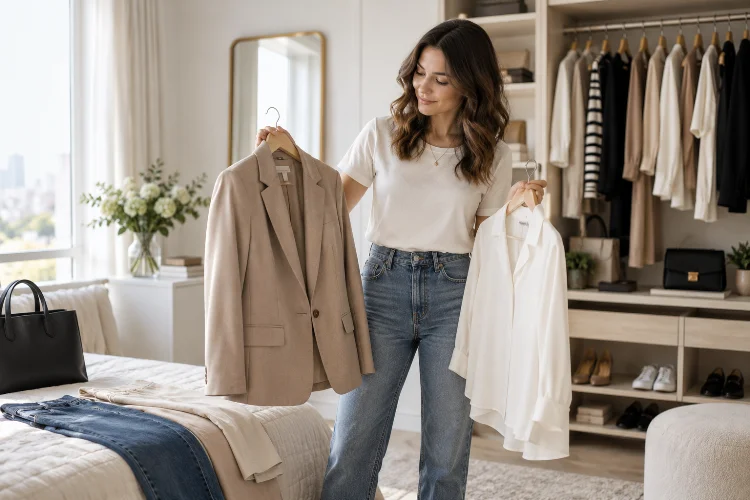
A classic blazer-and-jeans combination continues to appear in fashion styling guides because it can move easily between casual and more polished situations.
For a relaxed day, wear straight-leg jeans, a white T-shirt, an oversized blazer, and trainers. For dinner, keep the same base but switch to dark denim, a fitted jacket, and loafers or low heels.
Change the Mood Through Shoes
Shoes can completely change this formula.
Sneakers make it casual. Loafers make it slightly smarter. Boots add more weight, while ballet flats can make the same jeans and T-shirt feel softer.
This means one basic formula can create several different outfits without requiring a larger wardobe.
2. Button-Down Shirt + Trousers + Simple Shoes
A button-down shirt and trousers are useful when you want to look put together without creating a complicated outfit.
The trick is adjusting the fit.
A loose shirt with wide-leg trousers creates an easy, relaxed silhouette. A more fitted shirt with tailored trousers feels sharper and can work well for offices or meetings.
You can also leave the shirt slightly open over a tank top, roll the sleeves, or tuck only the front into your trousers.
These small details prevent simple pieces from feeling boring.
Keep the footwear equally uncomplicated. Loafers, clean sneakers, flats, or ankle boots can all work depending on the setting.
3. Knitwear + Jeans + One Strong Accessory
Cold-weather dressing can become much easier when you let a good knit do most of the work.
Start with jeans and a sweater, cardigan, or knitted polo. Then add one noticeable accessory.
It might be a leather belt, structured bag, patterned scarf, watch, earrings, or interesting shoes.
The idea follows a useful styling principle: not every piece needs to compete for attention. One strong element can provide personality while the rest of the outfit stays relatively simple.
A recent Who What Wear styling guide described a similar balance using one statement piece, a grounding neutral, and one intentional styling detail.
This is especially useful when your wardrobe contains mostly neutral colours.
4. Monochrome Base + Contrasting Layer
Wearing similar colours from top to bottom is one of the easiest ways to make an outfit look intentional.
You do not need every piece to match perfectly.
Try black trousers with a charcoal knit, cream trousers with an ivory T-shirt, or navy jeans with a dark blue shirt.
Then add contrast through the outer layer.
A camel coat over black, a denim jacket over cream, or a dark blazer over pale neutrals can create visual separation while keeping the outfit clean.
Monochrome dressing is also useful when you are unsure which colours work together because the base already feels cohesive.
Texture becomes more important here. Denim, cotton, wool, leather, and knitwear can create variation even when the colours are very similar.
5. Dress or Skirt + Casual Layer + Flat Shoes
Dresses and skirts do not automatically need to feel formal.
One of the easiest outfit formulas is to take a slightly dressier piece and combine it with something casual.
A midi dress can work with a cardigan and sneakers. A slip skirt can be paired with an oversized knit and flats. A simple dress can sit underneath a denim jacket or relaxed blazer.
Fashion styling guides often use this kind of contrast, combining polished skirts or dresses with practical knitwear and simple footwear.
The contrast is what makes the outfit feel natural rather than overdone.
This is also a useful formula when moving between seasons. You can add tights, boots, and heavier knitwear when temperatures drop, then return to lightweight layers and sandals later.
6. Relaxed Trousers + Basic Top + Third Piece
If jeans are not your favourite everyday option, relaxed trousers can become an excellent base.
Try straight-leg, wide-leg, linen, pleated, or softly tailored trousers with a simple T-shirt, tank, or knit.
Then use the “third piece” to complete the look.
That might be a jacket, cardigan, overshirt, vest, scarf, or statement bag. The third piece gives a basic two-piece combination more depth.
For example, beige trousers and a black tank are perfectly functional. Add a striped shirt worn open, and suddenly the outfit feels more efforless and considered.
The formula also works across different price points. Fit and proportion usually matter more than whether the individual pieces are expensive.
7. Jeans + Shirt + Knit Layer
Layering does not have to mean wearing five different garments.
A shirt and knitwear combination gives you enough visual interest without making dressing complicated.
Wear a crew-neck sweater over a button-down and allow the collar or cuffs to show. Alternatively, wear the shirt normally and drape a sweater over your shoulders.
You can pair this with straight jeans, cropped denim, or even relaxed trousers.
Recent casual styling coverage continues to feature shirts, denim, knitwear, and outerwear as adaptable pieces because they can be rearranged into multiple combinations rather than serving only one outfit.
This is one reason versatile basics can be more useful than constantly buying highly specific trend pieces.
How to Build Your Own Everyday Outfit Formulas
You do not have to copy someone else’s formula exactly.
Look at the outfits you already enjoy wearing.
Choose three to five favourites and break them into categories. You might discover that you repeatedly wear “wide trousers + fitted top + oversized layer” or “dress + jacket + flat shoes.”
That is your formula.
Then identify interchangeable pieces in each category.
If one formula uses trousers, you might have black tailored trousers, beige linen trousers, and relaxed navy trousers. The same basic outfit structure can suddenly produce three different looks.
Colour can make this even easier. Building around several neutrals that naturally coordinate – such as black, navy, cream, brown, grey, or denim – means more pieces can be combined without much effort.
You can still add bright colours, prints, and unusual accesories. The neutral foundation simply makes styling faster.
Keep Proportion in Mind
Even reliable outfit formulas sometimes feel slightly wrong.
Often, the issue is proportion rather than colour.
If both your top and trousers are extremely oversized, the silhouette may feel heavier than you intended. Try a more fitted top with loose trousers, or keep the oversized shirt but choose a straighter bottom.
The opposite can also work. A fitted outfit can gain balance from a relaxed blazer or larger coat.
There are no absolute rules here. The point is to notice how different shapes interact.
Small changes such as rolling a sleeve, tucking a shirt, exposing the ankle, or adding a belt can make the overall silhouette feel more balenced.
Everyday outfit formulas make getting dressed easier because they remove the need to create a completely new look every morning.
Start with combinations you already enjoy, such as jeans and a blazer, trousers and a button-down, knitwear with denim, or a simple monochrome base. Then create variety through shoes, outerwear, accessories, colour, and proportion.
You do not need a huge wardrobe to make this system work. In fact, recognising which pieces naturally work together can help you get more use from clothes you already own.
Open your wardrobe and identify three outfits you regularly feel good wearing. Break each one into a simple formula, save those combinations, and use them the next time you have five minutes to get dressed.