Gardening can look intimidating when every experienced gardener seems to understand mysterious topics such as soil pH, pruning schedules, crop rotation, and compost ratios.
Meanwhile, you are simply trying to keep one basil plant alive. The reassuring truth is that gardening is mostly learned through observation and practice.
You do not need a large garden, expensive tools, or perfect knowledge before planting something. A sunny windowsill, balcony, patio, or small patch of soil can be enough for your first project.
Learning how to start gardening when you have never grown anything begins with keeping the experiment small. Choose a suitable location, grow a few beginner-friendly plants, and learn how to recognise when they need water, light, or more space.
Some plants will thrive, while others may struggle despite your best efforts. That is normal. Every unsuccessful seedling teaches you something about your growing conditions, and every new leaf gives you another reason to continue.
Start With the Space You Already Have
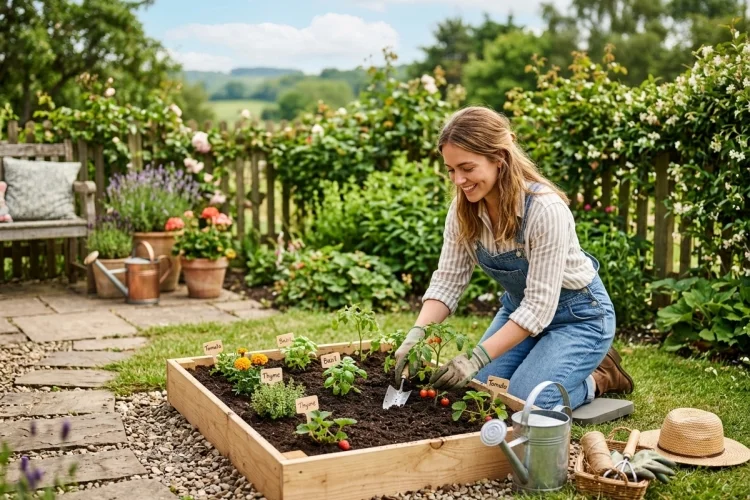
You do not need a traditional garden before you can call yourself a gardener. Plants can grow in raised beds, pots, window boxes, hanging baskets, reused containers, or directly in the ground.
Begin by examining your available space for several days. Notice where sunlight falls in the morning and afternoon, whether the area is exposed to strong wind, and how easily you can reach it with water.
Most vegetables perform best in a sunny location, although leafy crops such as lettuce, spinach, peas, and some salad greens can tolerate more shade than fruiting plants.
Convenience matters too. A small herb pot beside the kitchen door may receive better care than a larger vegetable bed at the far end of a garden. When plants are visible, you are more likely to notice dry soil, damaged leaves, and new growth.
Choose an Easy First Gardening Project
Your first project should be simple enough to manage without becoming another demanding responsibility. Avoid planting twenty varieties at once or redesigning the entire garden during your first weekend.
Choose two or three plants that fit your space and local conditions. Herbs such as mint, chives, parsley, and basil can be rewarding because you can use them in the kitchen.
Lettuce, radishes, salad leaves, and bush beans are also popular beginner crops because they grow relatively quickly.
You could begin with young plants from a nursery rather than seeds. Seedlings cost more, but they remove the delicate germination stage and give you an immediate plant to care for.
When buying plants, check the label for expected size, light requirements, watering needs, and suitable growing season.
The “right plant, right place” principle is one of the simplest ways to reduce maintenance because plants naturally perform better when their needs match the site.
Try Container Gardening if Space Is Limited
Container gardening is a practical option for balconies, patios, small yards, rented homes, and anyone who does not want to dig a permanent bed.
Almost anything can become a planter if it is safe, large enough, and able to release excess water. However, proper drainage is essential. Water trapped around the roots can reduce available oxygen and eventually cause root damage or rot.
Use a commercial potting mix rather than filling containers with heavy garden soil. Potting mixes are designed to hold moisture while still allowing air and excess water to move through the container.
Match the pot size to the mature plant. A small herb may grow comfortably in a modest container, while tomatoes, fruit bushes, and larger vegetables need more root space.
Remember that pots dry out faster than garden beds because the roots cannot travel farther into the ground to find moisture. Container plants therefore need more regular checking, especially during warm or windy weather.
Learn the Basics of Soil
Healthy soil gives plant roots physical support while holding the air, water, and nutrients needed for growth. You do not have to become a soil scientist, but it helps to notice whether your soil is loose, sandy, sticky, compacted, or constantly wet.
If you are planting in the ground, remove obvious weeds and loosen the surface without turning the entire area into fine dust. Add well-rotted compost or another suitable source of organic matter when the soil is poor or heavily compacted.
Compost can improve soil structure, help it retain water, and return organic material to the garden. It can be bought in bags or produced gradually from suitable food scraps and garden waste at home.
Do not assume that adding large amounts of fertiliser will make plants grow faster. Too much can damage roots or encourage weak growth. Follow the product directions and use a fertiliser suited to the type of plant you are growing.
For containers, fresh potting mix is usually the easiest beginner option because it avoids many drainage and compaction problems associated with ordinary ground soil.
Water According to the Soil, Not the Calendar
Beginners often kill plants with kindness. Watering every morning may feel responsible, but plants can suffer when their roots remain constantly wet.
Push a finger into the top layer of soil before reaching for the watering can. If the soil still feels damp below the surface, the plant may not need more water yet. If it feels dry, water thoroughly enough to reach the roots.
Apply water slowly near the base of the plant rather than lightly spraying the leaves. Slow watering allows moisture to soak into the soil instead of running across the surface.
Weather, plant size, soil type, and container size all affect watering frequency. A small pot in full sun may dry quickly, while a shaded garden bed with heavy soil can remain wet for much longer.
Wilting does not always mean the plant is dry. Roots damaged by excessive water may also struggle to supply the leaves. Check the soil before deciding what the plant needs.
Use Mulch to Make Maintenance Easier
Mulch is a layer of material placed on top of the soil around plants. It can include compost, shredded bark, leaves, straw, or another material appropriate for the garden.
A suitable layer helps slow water evaporation and suppress weeds, which means less watering and weeding for you. It can also protect the soil surface from heavy rain and temperature changes.
Leave a small space around stems rather than piling mulch directly against them. Thick, wet material touching a stem can encourage rot or create hiding places for pests.
Mulch is useful, but it is not a replacement for checking the soil. Plants may still need water during dry weather, especially while they are newly planted and developing roots.
Buy Only a Few Basic Gardening Tools
Gardening shops can make it seem as though you need a shed full of specialised equipment. For a small beginner garden, your tool list can remain very short.
A hand trowel helps with planting, a watering can provides controlled watering, and gloves protect your hands during messy work. You may also need pruning scissors for harvesting herbs or removing damaged growth.
If you are working in a larger bed, add a garden fork, spade, and rake only when the task requires them. Borrowing or sharing tools can be more sensible than buying equipment you use once a year.
Clean soil from your tools after use and store them somewhere dry. Sharp cutting tools should be kept safely away from children and used only for their intended purpose.
Spend more attention on plants, soil, and observation than on equipment. A simple watering can used consistently is more valuable than an expensive tool collection left in storage.
Expect Pests, Weeds, and Imperfect Plants
A garden is a living environment, so occasional holes, yellow leaves, weeds, and insects are normal. Do not treat every unfamiliar bug as an emergency.
Check plants regularly, including the undersides of leaves. Removing a few affected leaves or picking off visible pests may be enough for a small problem.
Learn to identify the issue before applying a pesticide. Some insects are pollinators or predators that help control other pests. A random chemical treatment can harm useful wildlife without solving the actual problem.
Weeding little and often is easier than waiting until unwanted plants dominate the bed. Pull weeds when the ground is slightly damp, trying to remove the roots rather than snapping off only the visible leaves.
A healthy garden does not need to look flawless. A few damaged leaves can remain while the plant continues producing flowers, herbs, or vegetables.
Keep a Simple Gardening Record
Gardening improves when you remember what happened, but you do not need a complicated spreadsheet. Keep a notebook or take photos with your phone.
Record what you planted, where you placed it, and approximately when you watered or fed it. Note which locations receive the most light and which plants struggle there.
Photos are especially helpful because gradual growth can be difficult to notice from one day to the next. They also help you remember successful plant combinations for the following season.
Give plants enough time to settle before moving them repeatedly. At the same time, be willing to change your approach when the leaves are consistently scorched, pale, dry, or weak.
The aim is not to follow every gardening rule perfectly. It is to become better at observing your own growing space.
Starting a garden is much easier when you treat it as a small experiment instead of a complete lifestyle transformation. Begin with the space you already have, choose two or three suitable plants, and use containers if digging a bed feels too ambitious.
Give roots appropriate soil, make sure pots can drain, and check moisture before watering. Add mulch where useful, buy only basic tools, and expect a few pests and unsuccessful plants along the way.
Choose your first plant today based on the light available in your space. Plant it in a suitable container or small bed, take a photo, and observe it for the next week. Gardening confidence does not arrive before you begin-it grows alongside the plants you learn to care for.