A simple outfit is rarely a boring outfit. A white shirt with jeans, a plain dress, or neutral trousers with a T-shirt can become the perfect foundation for creative styling.
The difference often comes down to what you add around it. Learning how to use accessories to transform a simple outfit gives you more ways to wear the clothes you already own.
A belt can change the shape of a loose dress, bold earrings can make a basic top feel ready for dinner, and a structured bag can give relaxed clothing a more polished finish.
Accessories also let you experiment without rebuilding your entire wardrobe. You can try a brighter colour, an unusual texture, or a stronger fashion statement while keeping the main outfit familiar and comfortable.
The goal is not to wear every accessory at once. It is to choose a few details that support the mood you want, balance the proportions of your outfit, and make the overall look feel more intentional.
Start With the Mood You Want to Create
Before adding accessories, decide how you want the outfit to feel. The same black trousers and white T-shirt can look relaxed, professional, romantic, creative, or suitable for an evening out.
For a casual look, you might add trainers, a canvas tote, and a simple watch. For work, switch to loafers, a leather belt, and a structured handbag. For dinner, choose heeled shoes, metallic jewellery, and a smaller bag.
This approach is easier than selecting accessories individually without a plan. Each item should contribute to the same general mood rather than pulling the outfit in several directions.
Personal clothing style is closely connected with self-expression and how people present their real, ideal, or creative selves. Accessories are particularly useful because they allow you to adjust that expression without changing the entire outfit.
Use Jewellery to Change the Level of Formality
Jewellery can transform an outfit quickly because it sits close to the face and naturally attracts attention. Even a small piece may make basic clothing look more considered.
Delicate earrings, a thin chain, or a simple watch can give everyday outfits a clean, understated finish. Larger hoops, layered necklaces, colourful stones, or sculptural pieces create more visual impact.
The neckline of your clothing can help guide your choice. A pendant can fill the open space created by a V-neck, while statement earrings may work better with a high neckline.
When the top already contains a busy pattern or decorative detail, simpler jewellery can prevent the outfit from feeling crowded.
You do not need to wear a matching necklace, earrings, bracelet, and ring. Modern styling often looks more natural when pieces relate through colour, material, or mood without forming a perfect set.
Vogue’s guidance on minimalist dressing similarly notes that even small jewellery can have a strong effect and that a simple look does not require a large number of extras.
Let Shoes Set the Direction of the Outfit
Shoes have a major influence on how an outfit is understood. They can change the same clothing from practical to polished in seconds.
Consider a plain midi dress. Trainers make it suitable for daytime errands, ankle boots give it an autumnal edge, loafers create a smarter look, and strappy heels move it toward an evening occasion.
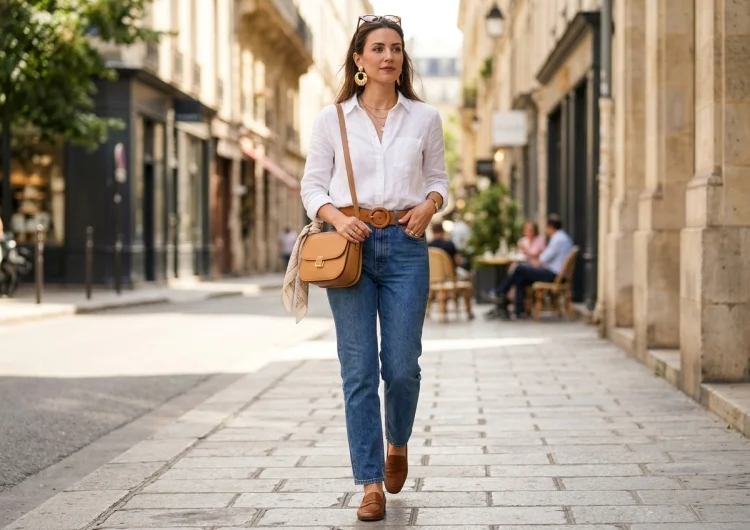
The same principle works with jeans and a basic shirt. Clean sneakers keep things casual, pointed flats look more refined, and chunky boots add contrast and attitude.
Pay attention to both style and condition. Shoes do not need to be expensive, but clean uppers, tidy laces, and well-maintained soles can make the entire outfit look more finished.
Comfort still matters. An accessory is not useful when it changes the outfit beautifully but makes walking through the day miserable.
Define Shape and Proportion With a Belt
Belts are practical, but they are also styling tools. They can introduce colour, break up a monochrome outfit, or create structure in loose clothing.
Add a belt to an oversized shirt, blazer, cardigan, or flowing dress to define the waist. With jeans or trousers, the belt can connect the colours of your top, shoes, and bag.
The width affects the result. A narrow belt usually feels subtle and polished, while a wide belt makes a stronger statement and changes the silhouette more noticeably.
You do not always need to match your belt and shoes exactly. Similar colour families often look more relaxed. A dark brown belt can work with tan loafers, for example, while a black belt may connect easily with black boots or a dark handbag.
Check that the belt fits the loops and proportions of the outfit. A very heavy buckle may overwhelm delicate clothing, while a tiny belt can disappear against a thick coat or oversized knit.
Use Bags as Both Practical and Visual Anchors
A bag often becomes one of the largest accessories in an outfit, so its shape, colour, and material can influence the entire look.
Structured bags tend to make relaxed outfits feel more polished. Soft totes, crossbody bags, backpacks, and woven styles usually create a more casual impression.
Try using a handbag as the single contrasting colour in a neutral outfit. A burgundy, green, cobalt, or red bag can add personality to black, navy, denim, beige, or grey clothing without requiring a bright head-to-toe combination.
Texture is another useful tool. Suede, woven fibres, polished leather, canvas, and metallic finishes all create different effects, even when the colours remain neutral.
Choose size according to both your body proportions and daily needs. A tiny bag may look elegant but becomes impractical when you need to carry a laptop, umbrella, water bottle, and several chargers.
Add Colour and Texture With Scarves
A scarf is one of the most flexible wardrobe accessories. It can be worn around the neck, tied to a bag, used as a headband, or added around a ponytail.
A printed scarf can introduce several colours at once, making it easier to connect otherwise separate pieces. For example, a scarf containing navy, cream, and red can bring together navy trousers, a cream top, and a red handbag.
Silk or satin-like scarves usually create a polished finish, while wool and knitted scarves add warmth and texture. Lightweight cotton versions can make simple spring and summer outfits feel more relaxed.
Keep the rest of the look quieter when the scarf has a large print. With a plain scarf, you have more freedom to add jewellery or a statement bag.
Vogue identifies the scarf as a particularly adaptable accessory because it can be styled around the neck, in the hair, or even as an alternative belt.
Balance Statement Pieces With Quieter Details
A statement accessory works best when it has enough visual space to be noticed. If your earrings, necklace, belt, shoes, bag, sunglasses, and scarf are all competing for attention, the outfit may lose its focus.
Choose one main feature, then let the other accessories play supporting roles. Large earrings might be paired with a simple necklace and neutral bag. Bright shoes may work best with understated jewellery.
This does not mean you must always be minimal. Maximalist styling can combine several bold elements successfully, but they usually share a clear connection through colour, theme, shape, or material.
A useful final check is to look at the complete outfit rather than examining each accessory separately. Ask where your eye goes first and whether that is where you want the emphasis.
When something feels excessive, remove one item and look again. Often, the outfit becomes stronger because the remaining details have more room to work.
Transform One Outfit for Different Occasions
Accessories are especially valuable when you need one outfit to work across several parts of the day.
Imagine wearing a black dress to work with loafers, a tote, a slim belt, and simple studs. For an evening event, you could remove the belt, change into heeled shoes, add statement earrings, and carry a small metallic bag.
A jeans-and-shirt combination can move from weekend errands to dinner through similar changes. Replace sneakers with boots, add a blazer, switch the backpack for a structured bag, and include a watch or necklace.
This technique is useful for travel because you can create several looks without packing several complete outfits. A small collection of scarves, jewellery, belts, and bags takes less space than additional jackets, dresses, or trousers.
Photograph successful combinations so you can repeat them later. You will gradually build a personal library of outfit ideas without buying more clothes.
Build a Small Accessory Collection Gradually
You do not need a large collection to make accessories useful. Start with versatile pieces that work with several outfits.
A practical foundation might include everyday earrings, one stronger jewellery piece, a neutral belt, a colourful or textured scarf, comfortable shoes, a casual bag, and a smarter bag. Add sunglasses, hats, watches, or hair accessories according to your lifestyle.
Before buying something new, imagine at least three outfits you could wear it with. This reduces the chance of purchasing a beautiful item that remains unused because it works with nothing else.
Second-hand shops and vintage markets can be excellent places to find distinctive jewellery, scarves, bags, and belts. Accessories often allow you to experiment with unusual design without committing to an entire statement outfit.
Keeping clothing and accessories in use through care, repair, resale, and reuse also supports a more circular approach to fashion. UNEP similarly highlights reuse and repair as important alternatives to constant fashion consumption.
Accessories can transform a simple outfit by changing its colour, shape, texture, mood, and level of formality. Shoes can redirect the entire look, belts can alter the silhouette, and jewellery can bring attention toward the face. Bags and scarves add both function and personality.
The key is to accessorise with intention rather than adding items simply because they are available. Choose a mood, create one clear focal point, and balance stronger pieces with quieter details.
Start with an outfit you wear regularly and style it in three different ways using accessories you already own. Photograph each version and notice which combinations feel most natural. A few thoughtful finishing touches can make familiar clothes feel completely new.