A small room can feel comfortable and stylish, but it can also become crowded surprisingly quickly. Add one oversized chair, a pile of storage boxes, poor lighting, and a few random decorations, and the walls suddenly seem much closer together.
Fortunately, you do not need to knock down a wall or move into a bigger home. Learning how to make a small room look and feel larger is mostly about improving what your eyes notice and how your body moves through the space.
A clearer layout can create easier movement. Better lighting can open dark corners, while mirrors and carefully chosen colours can make the room feel brighter. Furniture with storage can reduce clutter without leaving everything hidden in another room.
The aim is not to make a tiny bedroom look like a grand hotel suite. It is to create more visual breathing room, improve functionality, and make every part of the room feel intentional. Even a few affordable changes can make a noticeable difference.
Remove Clutter Before Adding New Décor
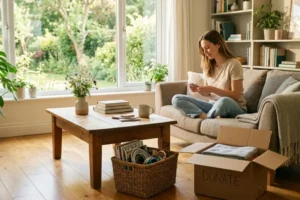
The fastest way to make a small room feel more spacious is often to remove things rather than buy more of them. When every surface is filled, your eyes have nowhere to rest.
Start with visible clutter. Clear the floor, windowsill, bedside table, desk, and top of any chest of drawers. Keep the objects you genuinely use or enjoy, then give everything else a permanent storage location.
This does not mean the room must become completely empty. A few books, photographs, plants, or decorative objects can make it feel personal. The goal is to avoid dozens of small items competing for attention.
Closed cabinets, drawers, baskets, and boxes can create a calmer appearance because everyday objects are not constantly visible. IKEA also recommends closed storage and simplified surfaces as useful ways to make compact spaces appear more organised and open.
Try applying the “one clear surface” rule. Leave at least one table, shelf, or section of furniture mostly empty. That small amount of negative space can make the entire room feel less crowded.
Improve the Furniture Layout and Walking Space
A room feels smaller when you have to turn sideways, step around furniture, or move objects every time you open a door. Clear circulation matters as much as the room’s actual dimensions.
Begin by identifying the main route through the space. In a bedroom, this might be the path from the door to the bed and wardrobe. In a living room, it may run from the entrance toward the sofa, window, or balcony.
Keep that route as direct as possible. Move unnecessary stools, side tables, plants, and storage boxes away from areas where people naturally walk.
Do not automatically push every piece of furniture tightly against the wall. Sometimes moving a sofa or chair slightly forward creates a more intentional arrangement and prevents the centre of the room from looking like an empty waiting area surrounded by clutter.
A carefully edited layout with fewer pieces can make a small bedroom feel noticeably larger.
Measure the room and furniture before rearranging or shopping. A quick floor plan on paper can help you test several layouts without dragging a heavy wardrobe across the floor five times.
Choose Fewer, More Useful Pieces of Furniture
People often assume that every item in a small room must be tiny. However, filling the space with many miniature chairs, shelves, and tables can create more visual clutter than using a few appropriately sized pieces.
Choose furniture according to function. One comfortable sofa may work better than several small chairs. A large chest of drawers can provide more useful storage than three separate cabinets.
Multifunctional furniture is especially helpful. Consider a bed with drawers underneath, an ottoman with hidden storage, a desk that doubles as a dressing table, or a bench that provides both seating and storage.
Furniture with visible legs can also create an airier appearance because more of the floor remains visible. Designers note that raised furniture keeps sight lines across the floor more open and allows light to move beneath the piece.
Avoid buying transforming furniture simply because it looks clever online. A folding desk or convertible table is only valuable when it is easy enough to use regularly.
Make the Most of Natural and Artificial Light
Dark corners can make a room feel smaller because parts of the space visually disappear. Open the curtains fully during the day and avoid placing bulky furniture directly in front of the window.
Choose curtains that extend beyond the sides of the window when possible. This allows more glass to remain visible when they are open. Hanging the curtain rod closer to the ceiling can also draw attention upward and make the wall appear taller.
Do not rely on one bright ceiling fixture at night. Use lighting at different heights, such as a ceiling light, floor lamp, desk lamp, wall light, or small reading lamp.
Designers recommend using several light sources at different levels because they guide the eye toward multiple parts of the room, making the interior feel more layered and expansive.
Use warm or neutral bulbs that provide enough brightness for the room’s purpose. A bedroom can have softer lighting, while a small office or kitchen needs clearer task lighting.
Use Colour to Create Visual Continuity
Light colours are popular in small rooms because they can reflect more available light and create an open appearance. Soft white, pale grey, cream, muted blue, and gentle green can all work well.
However, you do not have to paint everything bright white. A room with limited natural light may feel more comfortable in a warm neutral or even a deeper, carefully chosen colour.
The key is continuity. Large areas of sharp colour contrast can divide a room visually, while a more limited palette creates a smoother view. Painting walls, trim, and even the ceiling in similar shades can soften the visible boundaries of the room.
You can still include bold colours through cushions, art, bedding, lamps, or one statement chair. Keeping the largest surfaces relatively coordinated allows these accents to add personality without overwhelming the space.
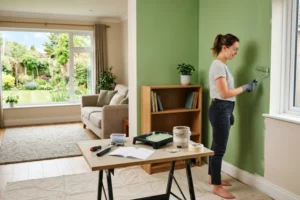
Always test paint in the actual room. Colour changes according to daylight, artificial lighting, wall direction, and nearby furnishings.
Use Mirrors With a Clear Purpose
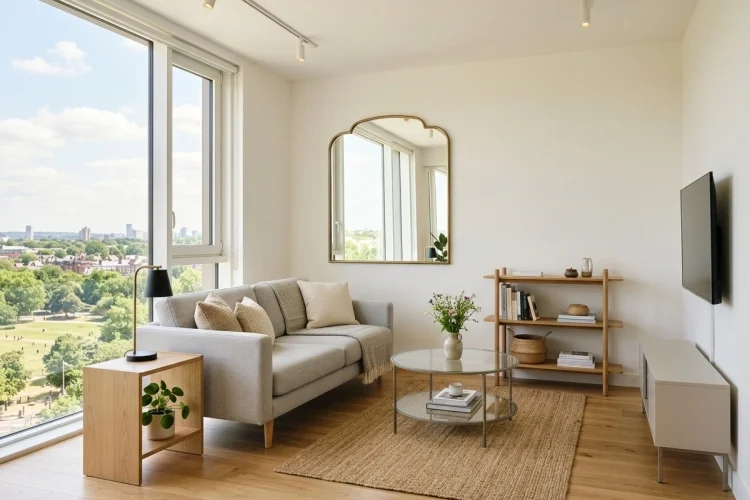
Mirrors are one of the most familiar tricks for small-room decorating because they reflect both light and the surrounding interior. This creates an illusion of greater depth.
Place a mirror opposite or near a window to distribute more daylight. A large mirror can have a stronger visual effect than several tiny ones, although a coordinated group can also work as wall decoration.
In a narrow room, a wide horizontal mirror may help the wall feel broader. A tall mirror draws the eye upward and is useful when you want to emphasise ceiling height.
Mirrors can make compact rooms look brighter and more open, but their placement matters. A mirror facing a cluttered shelf will reflect the clutter and visually double it.
Before hanging one, stand where you will normally enter or sit and check what the mirror will reflect. Aim for a window, artwork, light fixture, or calm section of the room.
Use Walls and Vertical Space More Effectively
When floor space is limited, look upward. Tall shelves, wall-mounted cabinets, hooks, and floating furniture can provide storage without taking over the centre of the room.
Install shelves above a desk, door, bed, or television, but avoid filling every wall from edge to edge. A mixture of practical storage and open wall space prevents the room from feeling like a stockroom.
Tall bookcases can draw the eye toward the ceiling. Mounting curtain rods high, using vertical artwork, or adding narrow wall lights can create a similar effect.
Recent designer guidance emphasises vertical storage and design elements because they encourage the eye to scan upward, creating a greater sense of volume.
For renters, removable hooks, freestanding ladder shelves, tall narrow units, and modular wall systems can offer useful alternatives to permanent built-ins.
Keep heavier or frequently used items on lower shelves. Use higher storage for seasonal clothes, spare bedding, luggage, or objects you do not need every day.
Simplify Textiles, Patterns, and Decorative Details
Textiles can make a room warmer and more inviting, but too many unrelated patterns may make a small space feel busy. Choose a main colour palette and repeat it across curtains, cushions, bedding, and rugs.
A larger rug is often more effective than a very small one. A tiny rug can visually divide the floor and emphasise the limited dimensions, while a larger rug connects the furniture into one clear zone.
Choose patterns according to scale. One larger print can make a confident focal point, while several small competing prints may create visual noise.
Floor-length curtains can make the walls appear taller, particularly when the fabric is similar in colour to the walls. Avoid extremely heavy curtains when they block most of the window or take up valuable visual space.
You do not need to eliminate personality. One large artwork, an interesting light fixture, or a bold headboard can give the room a clear focal point and reduce the temptation to decorate every available surface.
Making a small room look and feel larger is less about hiding its size and more about helping the space function clearly. Remove unnecessary clutter, protect walking routes, and choose furniture that performs more than one job.
Use layered lighting to brighten dark areas, mirrors to reflect useful views, and a coordinated colour palette to reduce visual interruption. Take advantage of vertical storage while leaving enough empty wall and floor space for the room to breathe.
Begin with one area today. Clear a crowded surface, move furniture out of the main walkway, or place a lamp in a dark corner. Once the layout feels calmer, you can gradually improve the colours, storage, mirrors, and decorative details without turning the project into a complete renovation.