
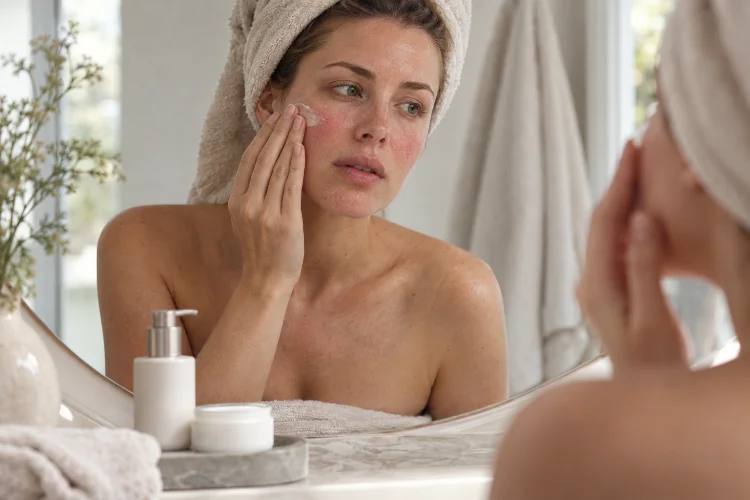
Your skincare routine is supposed to make your face feel better, so it can be confusing when suddenly everything seems to sting.
Your usual moisturiser burns. Your cheeks feel unusually tight after cleansing. Skin that normally looks smooth becomes flaky, rough, red, or strangely sensitive. At this point, you may hear one explanation repeated everywhere online: your skin barrier is damaged.
The idea is not just another skincare trend. Your outermost skin layer plays an important protective role, helping retain water while limiting exposure to irritants and other substances from the outside environment.
When that protective function is disrupted, the skin can become dry, uncomfortable, and more reactive.
Fortunately, repairing a damaged skin barrier usually does not require buying an entirely new shelf of products. In many cases, simplifying your routine and giving your skin time to recover is more useful than adding another active ingredient.
Here is how to recognise the warning signs and build a gentler recovery routine.
What Exactly Is the Skin Barrier?
When people talk about the skin barrier, they are usually referring mainly to the outer portion of the epidermis known as the stratum corneum.
One common analogy is a brick wall. Skin cells called corneocytes act like the bricks, while lipids including ceramides, cholesterol, and fatty acids help fill the spaces around them. Together, they create a protective outer layer.
One of its major jobs is preventing too much water from escaping through the skin. It also helps separate the more delicate living tissue underneath from environmental irritants and microorganisms.
When this structure becomes disrupted, water loss can increase and skin may become more vulnerable to dryness and irritation.
How to Recognise a Damaged Skin Barrier
There is no single home test that can definitively tell you whether your barrier is compromised.
Instead, look for changes in how your skin normally behaves.
Common signs can include unusual dryness, flaky patches, itching, tightness, rough texture, redness, tenderness, and increased sensitivity. Products that previously felt comfortable may suddenly sting when applied.
Pay Attention to Sudden Sensitivity
One particularly useful clue is a change from your normal baseline.
Imagine you have used the same basic moisturiser for months without a problem. After several nights of aggressive exfoliation, the same product suddenly causes burning around your cheeks.
That does not automatically prove barrier damage, but combined with dryness, redness, or tightness, it suggests that your skin may be irritated and needs a gentler routine.
Persistent rashes, cracking, oozing, swelling, severe pain, or suspected infection should not simply be labelled “barrier damage.” Those symptoms can have other causes and are worth discussing with a dermatologist or other qualified clinician.
What Causes Skin Barrier Damage?
Often, the problem is not one dramatic mistake. It is several small sources of irritation happening at once.
Over-exfoliating is a classic example. Using an acid toner, retinoid, scrub, and exfoliating cleanser together may be more than your skin can comfortably tolerate.
Harsh soaps and repeated scrubbing can also remove natural oils and worsen dryness. Cleveland Clinic identifies harsh cleansing, excessive exfoliation, and inadequate moisturising among factors that can interfere with the barrier.
Very hot showers may contribute as well. NHS guidance notes that regular soaps and shower gels can dry skin and worsen some dry or itchy skin conditions.
Environmental conditions matter too. Cold weather, low humidity, wind, sun exposure, and air conditioning can all make already-dry or sensitve skin feel more uncomfortable.
Simplify Your Routine First
When irritated skin appears, the temptation is to fix it with more products.
That can backfire.
For a short period, consider stripping your routine back to the basics: gentle cleansing, moisturising, and daytime sun protection.
If strong active ingredients are clearly causing stinging or irritation, temporarily reducing their use may give your skin a chance to settle. This can include exfoliating acids, retinoids, strong acne treatments, or other potentially irritating formulas.
Do not introduce several new products at once. If something causes discomfort, it becomes much harder to identify the problem when five different products were added during the same week.
A simple routine is not boring when your skin is irritated. It is often exactly what your skin needs.
Cleanse Without Stripping the Skin
Cleansing should remove dirt, sunscreen, oil, and makeup without leaving your face feeling painfully tight.
Choose a mild cleanser and use lukewarm rather than very hot water. Avoid aggressive scrubbing with rough washcloths or cleansing tools while your skin is recovering.
The American Academy of Dermatology recommends gentle, non-abrasive cleansing and fragrance-free products for sensitive skin because harsh cleansing and scrubbing can worsen irritation.
For very dry skin, you may not need an intensive morning cleanse. Depending on your skin type and dermatologist’s advice, a simple rinse or less-frequent cleansing may be enough.
The goal is not to make your skin feel squeaky clean. That sensation often means you have removed more surface oil than necessary.
Use Moisturiser to Support Barrier Recovery
Moisturiser is one of the most useful tools when repairing dry, irritated skin.
Emollients help reduce dryness by creating a protective layer and limiting moisture loss. NHS guidance explains that these products can help trap moisture in the skin and improve hydration.
Apply your moisteriser shortly after cleansing while the skin is still slightly damp. This helps retain water rather than allowing it to evaporate immediately.
Creams and ointments are generally richer than thin lotions and may be more suitable when the skin is particularly dry. The AAD also recommends mild, fragrance-free moisturisers for dry or reactive skin.
Look for Helpful Barrier-Supporting Ingredients
Ceramides are frequently discussed because they are naturally important components of the stratum corneum.
Research has linked impaired ceramide composition with reduced barrier function in conditions such as atopic dermatitis, and ceramide-containing moisturisers are widely used to support hydration and barrier care.
Other useful moisturising ingredients may include glycerin, hyaluronic acid, petrolatum, fatty acids, and cholesterol.
You do not need every ingredient in one product. Formula tolerability matters more than having the longest ingredient list.
Temporarily Reduce Unnecessary Irritation
A damaged or irritated barrier is usually not the best time to chase every skincare goal at once.
If your skin feels raw, burning, or unusually dry, consider reducing treatments aimed at exfoliation, brightening, or aggressive acne control until comfort improves.
Once your skin feels normal again, reintroduce products gradualy. Start with one active at a time rather than immediately returning to your full routine.
For example, if you previously used a retinoid every night, you might restart less frequently and watch how your skin responds.
This approach also helps identify whether one specific product or combination was contributing to the irritaton.
Do Not Forget Sun Protection
UV exposure can damage skin, so daytime protection remains important even when you are simplifying your routine.
The American Academy of Dermatology recommends broad-spectrum, water-resistant sunscreen with SPF 30 or higher.
If your usual sunscreen suddenly stings, look for a fragrance-free formula designed for sensitive skin and test it cautiously.
Sun-protective clothing, hats, and shade can also reduce exposure without requiring additional layers of skincare.
Think of sunscreen as part of protecting recovering skin rather than an optional cosmetic step.
How Long Does Skin Barrier Repair Take?
There is no universal recovery timeline.
Mild irritation may begin feeling better within several days after the trigger is removed, while more significant dryness or an underlying skin condition can take considerably longer.
Do not judge progress only by appearance. Reduced stinging, less tightness, improved comfort, and better tolerance of moisturiser can all indicate that your routine is moving in the right direction.
If there is little improvement after a couple of weeks of gentle care, or symptoms are becoming worse, consider seeing a dermatologist.
Conditions such as eczema, rosacea, allergic contact dermatitis, acne, and infection can sometimes resemble what people casually describe as barrier damage.
Learning how to recognise and repair a damaged skin barrier is mostly about noticing when your skin needs less rather than more.
Dryness, flaking, tightness, redness, and unexpected stinging can be signs that your skin is struggling with irritation.
A simpler routine built around gentle cleansing, regular moisturising, reduced exposure to irritating actives, and reliable sun protection can give the outer skin layer a better environment for recovery.
Avoid trying to fix everything overnight. Remove obvious irritants, keep your routine predictable, and reintroduce stronger products slowly once your skin feels comfortable again.
If your current skincare routine suddenly feels painful, start by looking at what you can simplify today. Sometimes the most effective skincare move is giving your skin fewer things to deal with.